School of Data Science · Research Interest Group — Interpretability for AI Safety & Science
Hackathon:
Residual stream
Drag to move through the layers. Warm tokens are where attention lands.
A hackathon on what language models do inside, and on catching them when it goes wrong. Two Friday sessions, a week apart. Pick a question, leave with working code and a five-minute talk.
When
Fri 9 October Fri 16 October, 2026
Where
Capital One Hub
Teams
2–4 people Solo sign-ups matched
Theme: Interpretability, safety evaluation, and security of AI systems
At the kickoff you get a short list of starting problems, each small enough to finish in a day. Take one as written, change it, or bring your own — anything within the theme works.
Potential projects
Track — Interpretability
Open the model up
Find the mechanism behind a behaviour and show your evidence for it.
Locate a refusal direction in activation space
Patch activations to isolate a circuit
Test whether an SAE feature transfers between models
Track — Safety evaluation
Build a scorecard
Capture an emergent safety problem in cybersecurity and measure the model's performance.
Define the scenario before evaluation
Use the LLM-judge boilerplate in the starter repo
Focus on single- or multi-agents using small models
Track — Security
Treat it as attack surface
Find a failure in a model-driven system, then write the test that catches it.
Prompt injection through retrieved content
Tool misuse in an agent scaffold
Data exfiltration paths and their detectors
Schedule
Two sessions, a week apart.
The first Friday sets you up. The second is the build day.
Friday 9 Oct
Kickoff · 9:00 AM – 11:00 AM
Problem statements releasedThe full brief, the starting problems, and the evaluation criteria.
Organizers' talksLightning talks on interpretability, safety, and cybersecurity.
Tooling walkthroughStarter repo and the LLM-judge boilerplate.
NetworkingMeet the organizers and other attendees and form a team. We will match solo sign-ups.
Friday 16 Oct
Build day · 9:00 AM – 5:00 PM
Doors open, BreakfastRoom is yours all day.
KeynoteGreg Frank. MoltAI
Build timeWork on your project.
PresentationsFive minutes per team, plus questions.
ResultsGift cards for the winning team.
What you hand in
A five-minute presentation at 3:30 on the build day.
Five minutes per team, plus questions. Slides are optional. Show what you built and what you found.
Who it’s for
Any student comfortable with Python.
Open to graduate students in data science, computer science, and engineering, and to undergraduates with relevant coursework. No prior interpretability experience is needed; the tooling walkthrough on the first day covers the starter repo.
Organizers
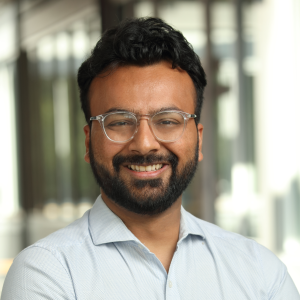
Chirag Agarwal
School of Data Science Computer Science
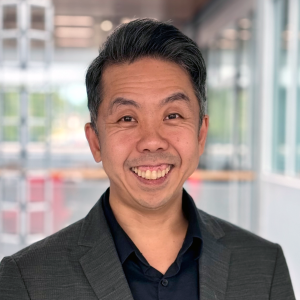
Yong-Yeol Ahn
School of Data Science
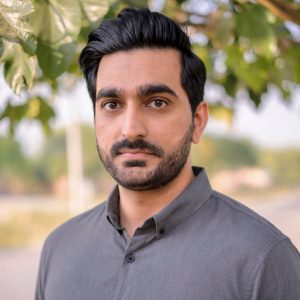
Wajih Ul Hassan
School of Data Science Computer Science
Registration
Two minutes. No team or idea required yet.
Registration closes on September 25th · Places are capped by room capacity.